Blog by Japheth Monzon and Adassa M. Dixon
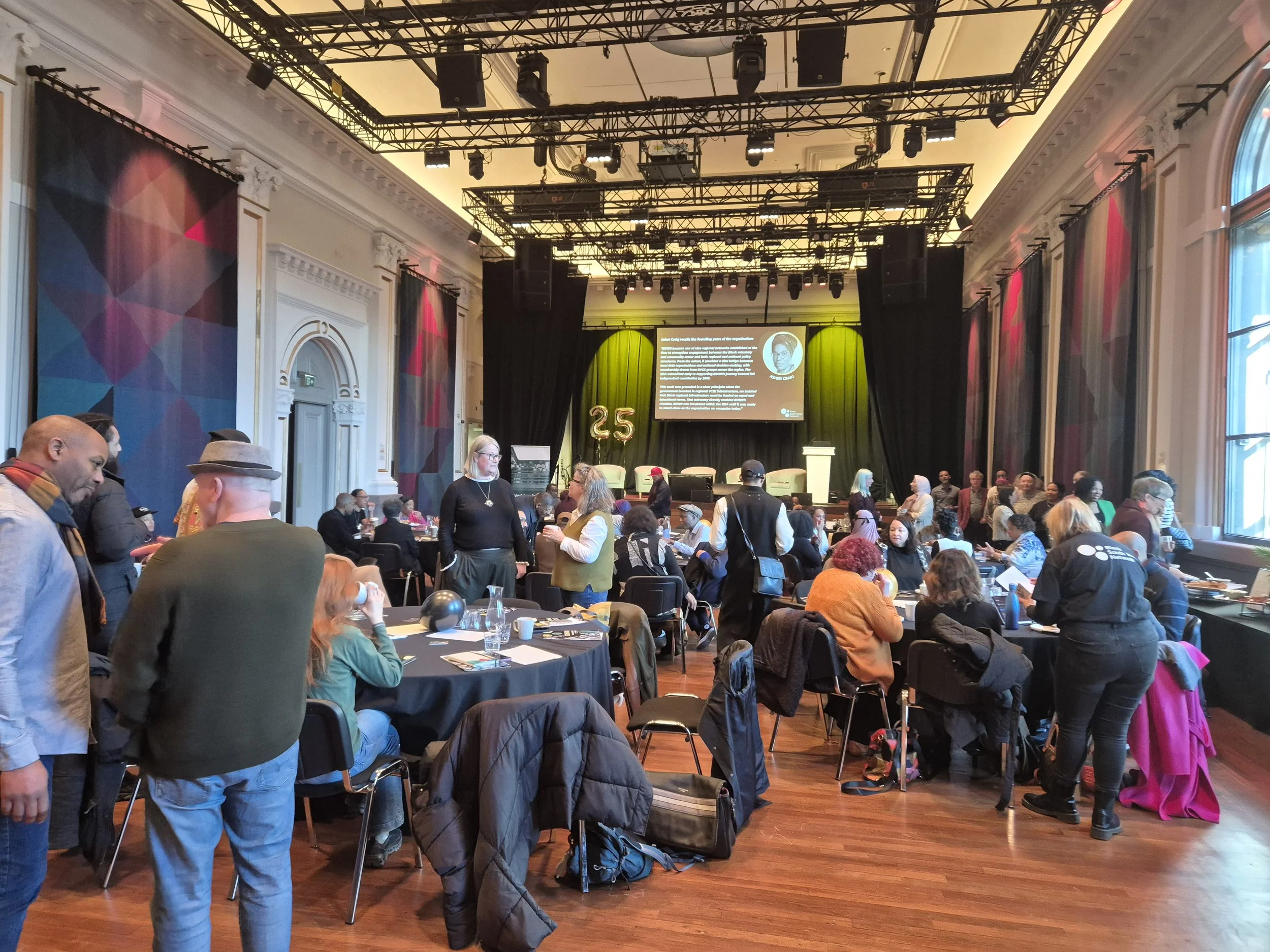
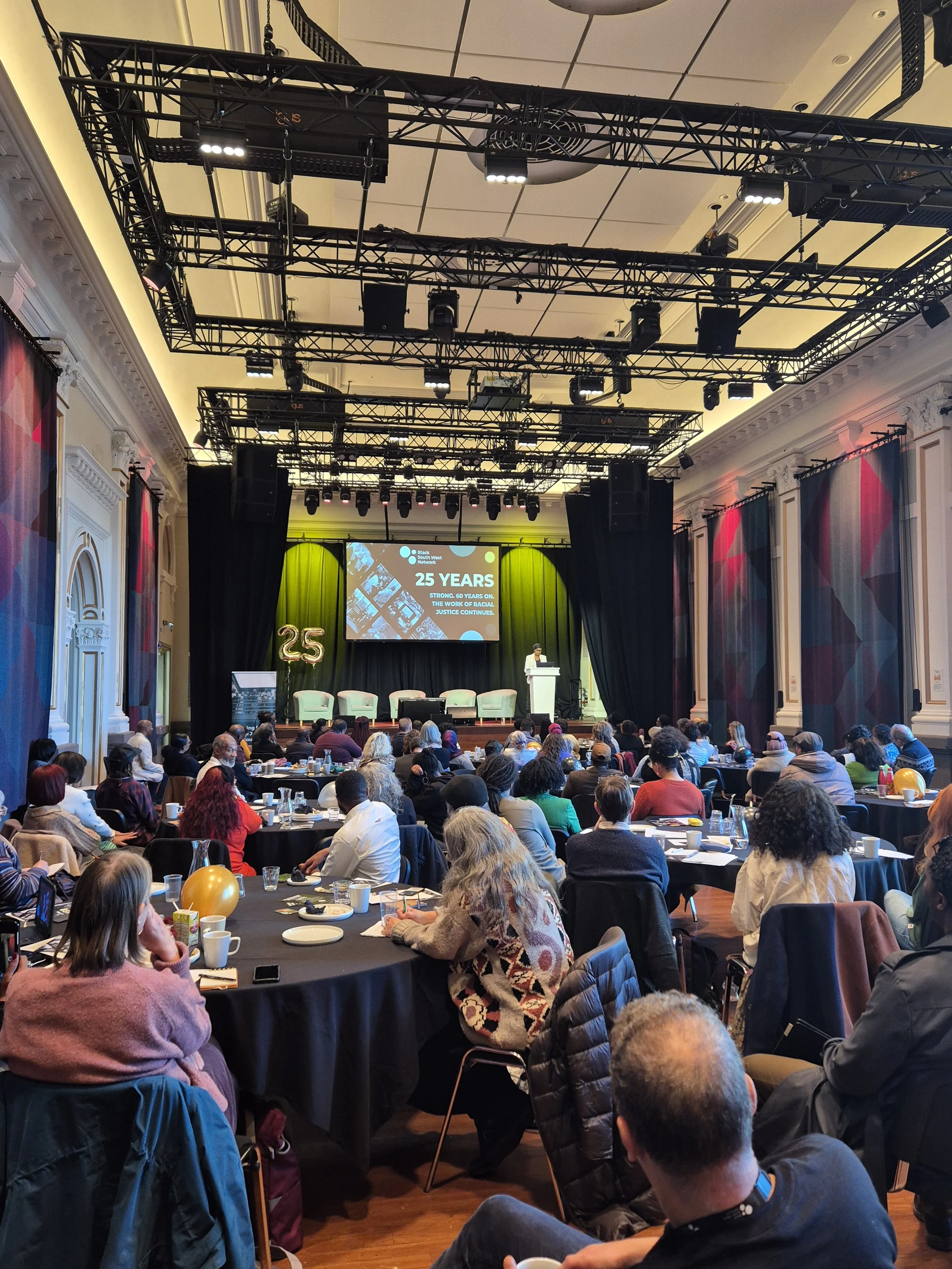
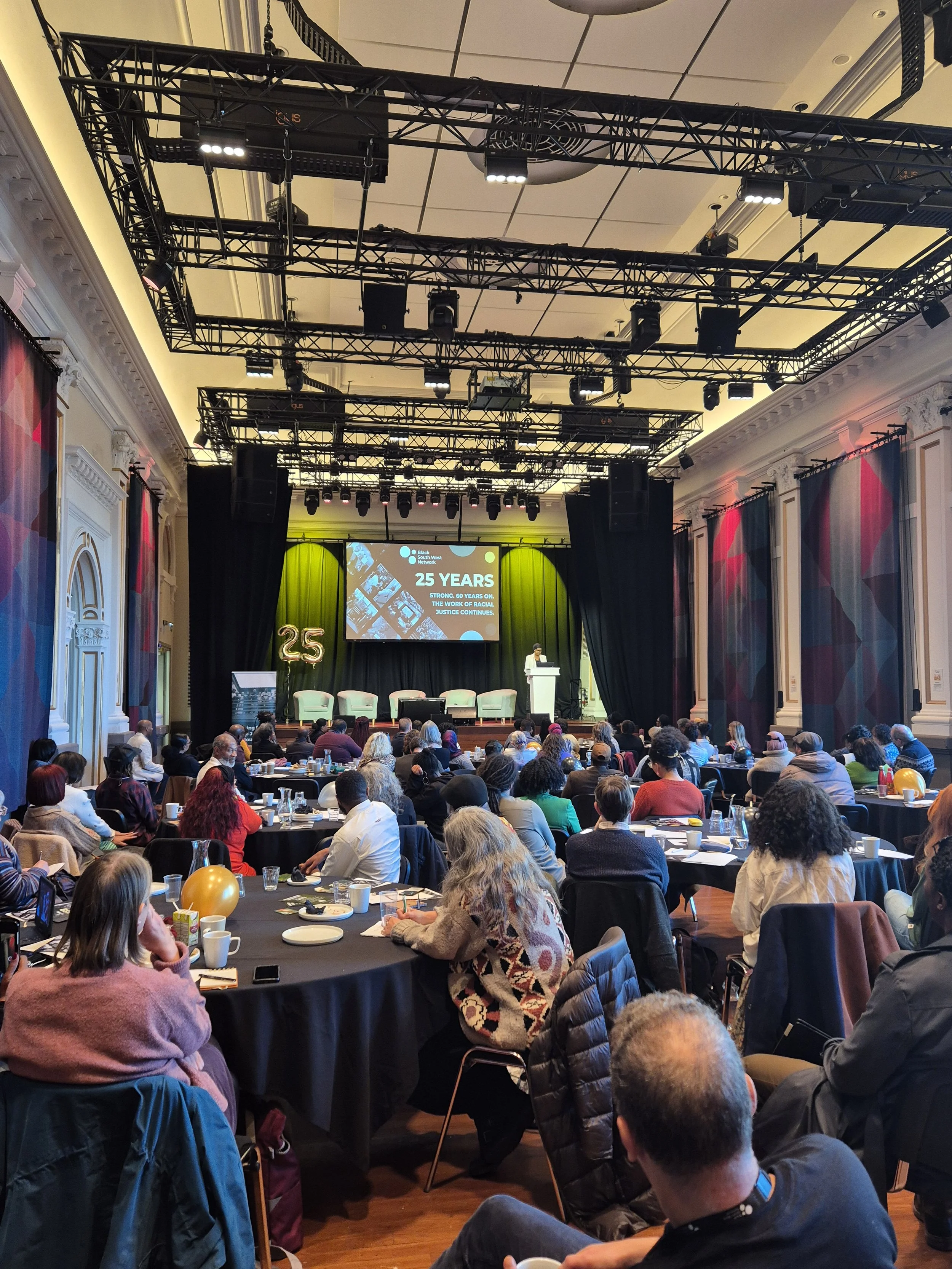
This year’s Annual General Meeting comes at a particularly auspicious moment in time. At the same time as BSWN’s 25th Anniversary, we were also faced with the 60th Anniversary of the Race Relations Act 1965 –– the landmark piece of legislation that sets the foundation of the United Kingdom’s equality laws to this very day. Amid the increasingly complex challenges faced by Black and Racially Minoritised communities, this AGM provided a crucial opportunity to reflect on our societal progress towards racial justice, and to deliberate –– amongst ourselves and allies –– on what more must be done to realise the future we all aspire to.
Our collective reflections on the past and present were aided by the insightful addresses of both Asher Craig (former Deputy Mayor of Bristol) and Sado Jirde (BSWN Director) as well as the fantastic contributions of panellists like Muneeb Hafiz (Race Equality Unit, Cabinet Office), Julz Davis (Curiosity Unlimited), and Monira Chowdhury. It was quickly established that, despite significant strides of progress, inequalities persist across multiple parts of life, from education and employment to healthcare and representation. Yet, the resilience, leadership, and (importantly) creativity demonstrated by our community members continues to drive incredibly meaningful change. This AGM is not only a moment to acknowledge these achievements, but also to curate a space where these achievements can be shared and be used to inspire others to continue the important work.
This AGM holds a special place in our histories, not just because of the coincidental anniversaries, but because of the sheer scale and ambition made palpable throughout the day. As years go by, our AGM steadily grew larger, more complex, busier, and more innovative. We aspired to go beyond the ordinary agenda items, but to be intentional in who we aimed to platform, what things they wanted to share, and what kinds of things we choose to uplift to the wider community.
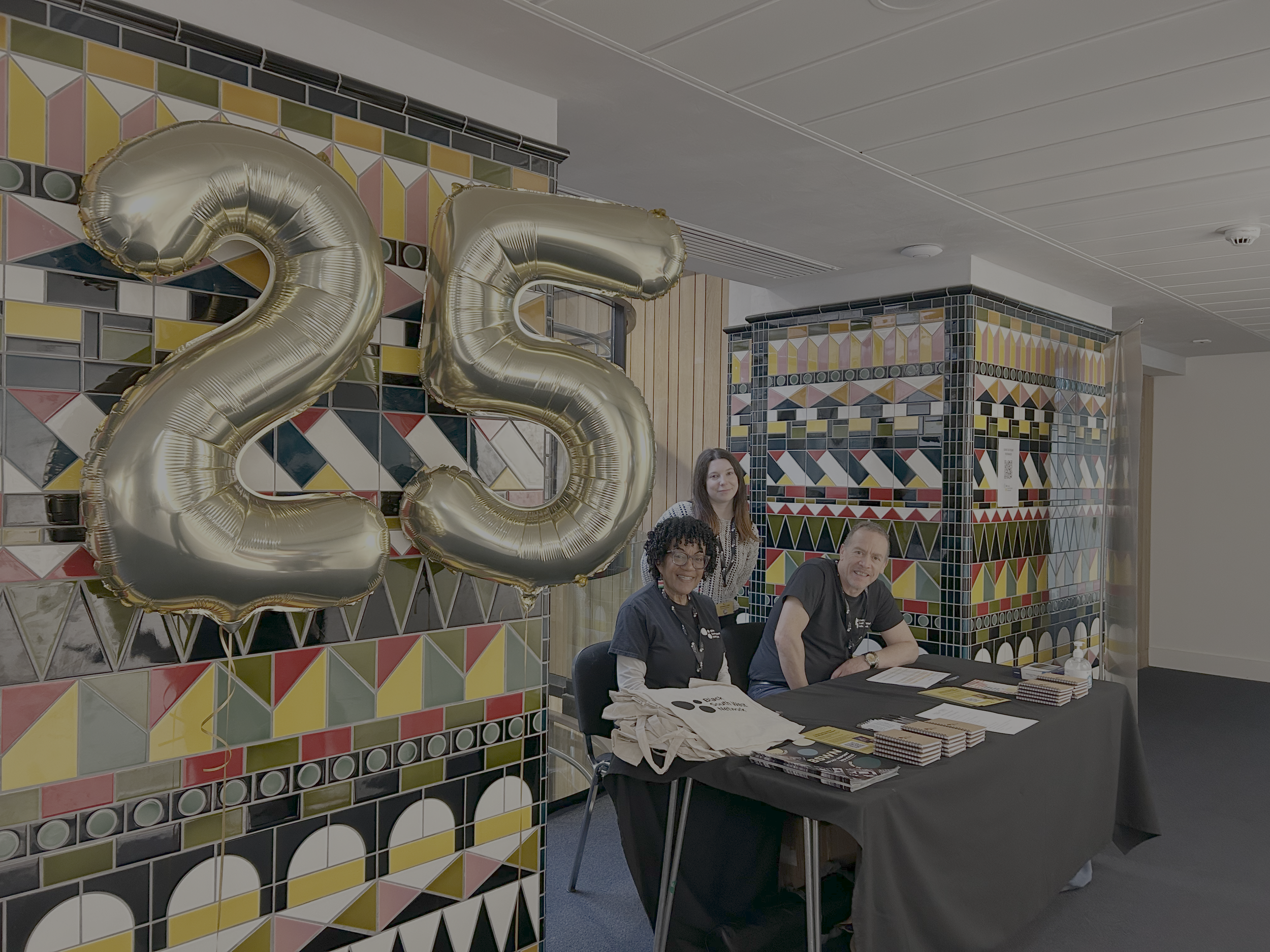
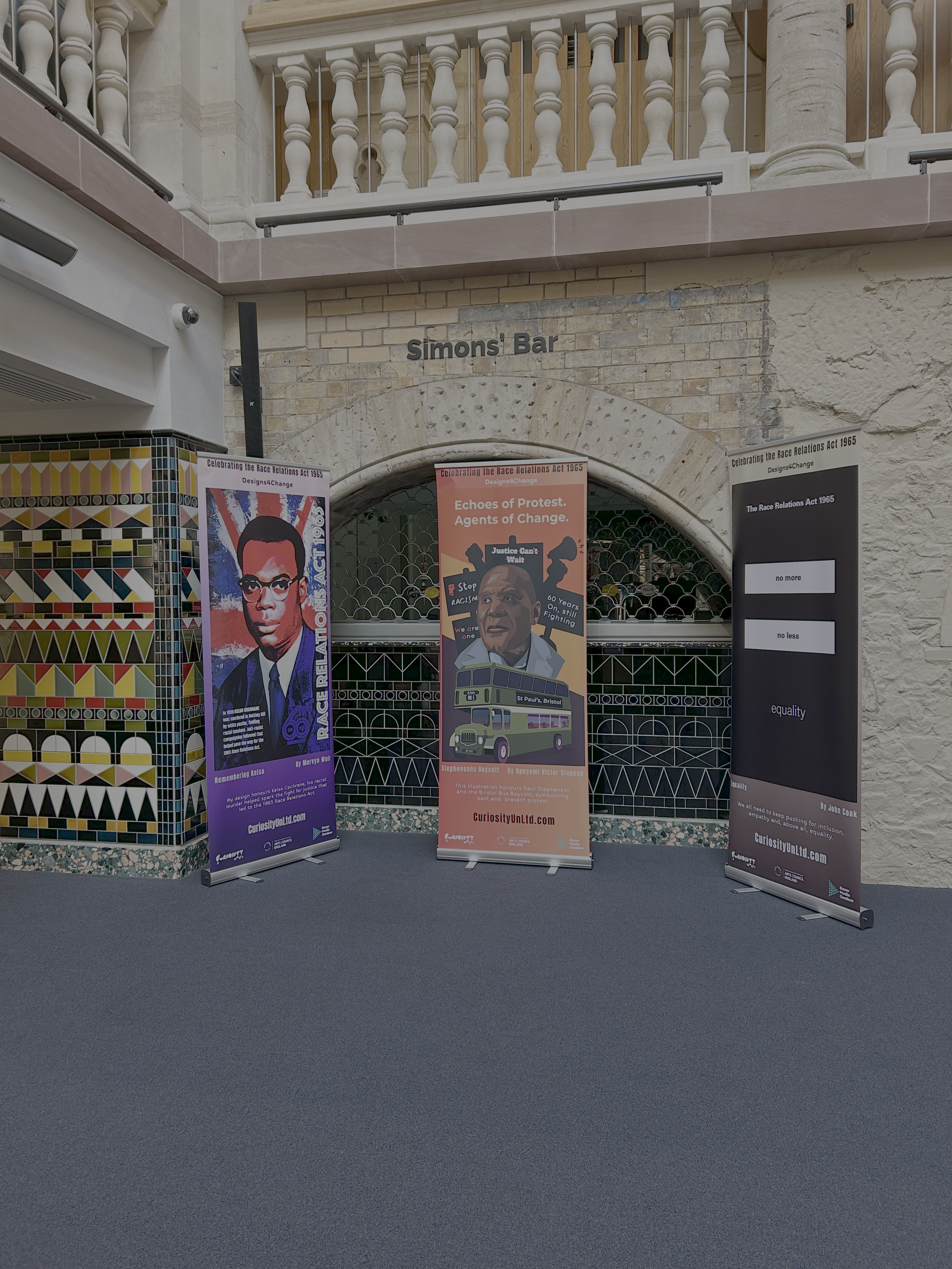
The past year has been monumental for our cultural heritage work. First, we confirmed the beginning of our UnMuseum Project’s Delivery phase, with a planned programme of engagement spanning the next three years. Moreover, we finalised the delivery of our CultureBiz Connect programme which supported the development of Black and Racially Minoritised creatives, at the same time commissioning them to create a piece of work to help build their creative resumé. We wanted to forefront this at the AGM.
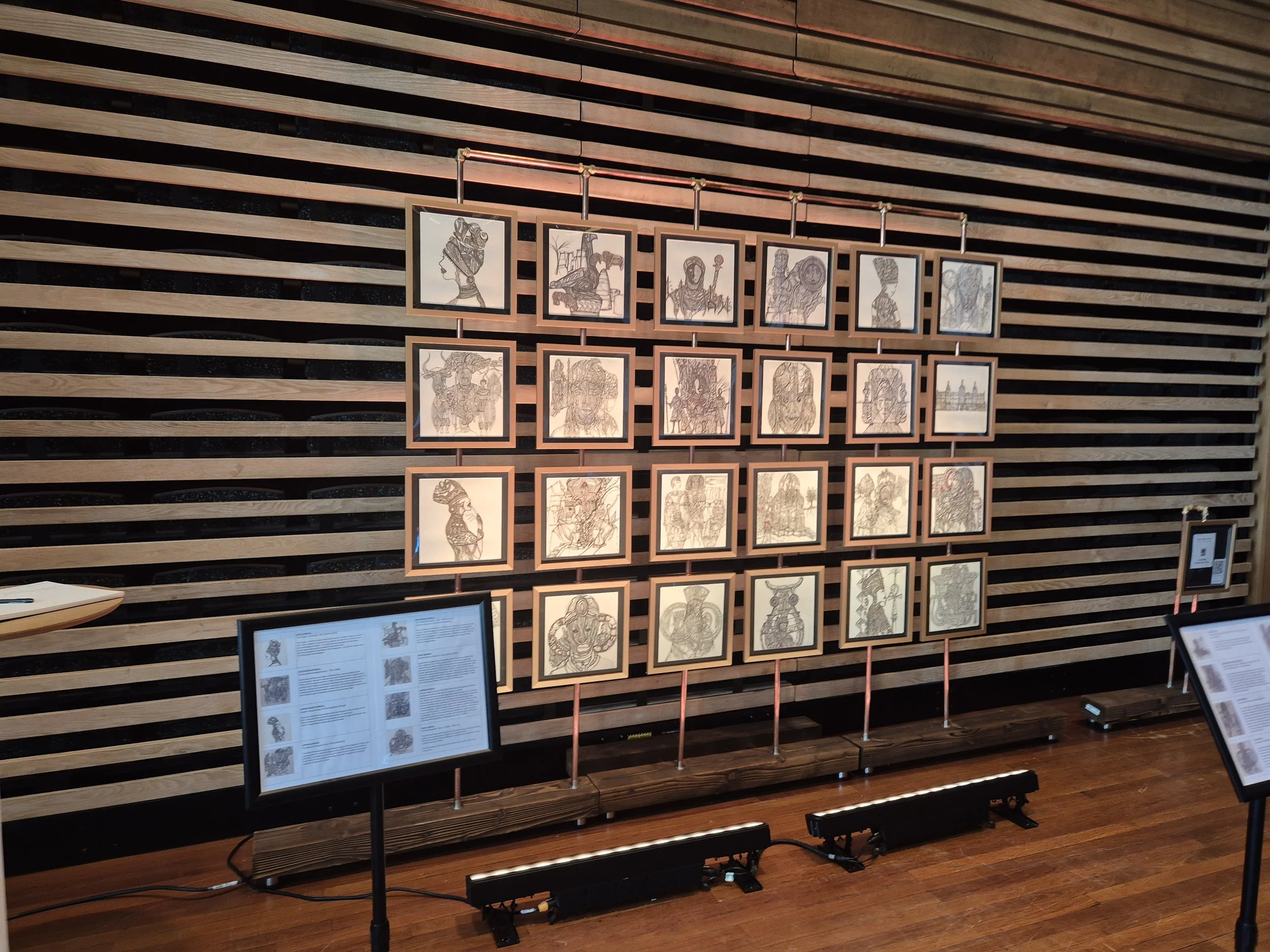
As part of this new direction towards creativity, we invited two incredible poets to share their work with our audiences: Stuart Taylor (BSWN Associate) and Miles Chamber (Bristol’s First Poet Laureate). Our first exhibition was curated by Julz Davis, Disruptor-In-Chief at the Arnolfini and Founder of Curiosity Unlimited who displayed a collection of banners and placards commemorating the efforts of racial justice pioneers which resulted in the Race Relations Act 1965. Central to this was a celebration of the Bristol Bus Boycotts, a vital stepping stone taken by activists towards the establishment of equal employment opportunities for racially minoritised people in the UK. The second exhibition was ‘Under African Skies’ by Jacqui Braithwaite FRSA. Braithwaite contributed an impactful installation of 24 hand-drawn canvases mounted on a copper frame reminiscent of Benin Bronze. Through these captivating illustrations of African Kingdoms, Braithwaite celebrates the richness of pre-colonial Africa, and demonstrated the impactful meeting of history, heritage, and art.
Adassa M. Dixon, our newest member of the BSWN Team as Community Curator of the UnMuseum Project, helped set up Jacqui’s installation. Here’s what she said: “It’s was a joy to support the showcasing of artists that BSWN has supported at the AGM. These installations exemplified our commitment to reimagining how our communities can experience heritage and culture. I’m thrilled to be a part of the delivery of UnMuseum, building on this by showing what’s possible when we infuse everyday spaces with art and history - this is only the beginning!”
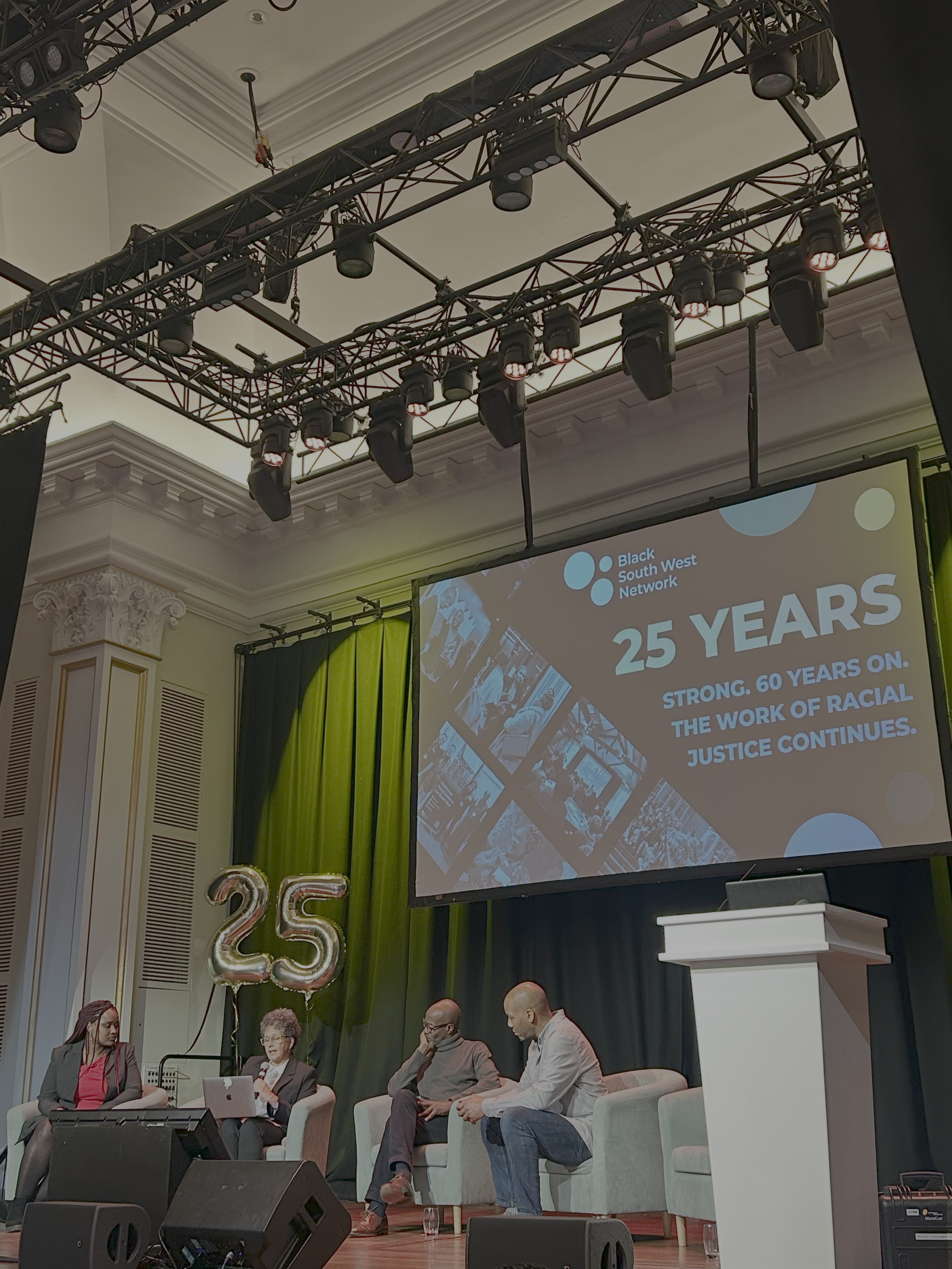
We also welcomed three close colleagues of BSWN via the Impact Discussion Panel:
Louise Ndibwirende (Director and Film Maker)
Lana Lynn Moreno (Psychotherapist)
Ian Noah (Race Equality North Somerset)
These three remarkable individuals shared personal reflections on how BSWN has supported their growth and work. Louise benefited directly from our CultureBiz Connect programme, which empowered her to continue pursuing her work as a director. Lana Lynn collaborated closely with our Community Development team, strengthening the delivery of her Preventative and Restorative Counselling Services CIC (PARCS). Finally, Ian Noah—who works alongside our Community Development team, the South West Race Equality Action Group, and the new South West Race Equity Research Network—highlighted the breadth of his engagement across multiple BSWN initiatives, with both organisations united in their shared commitment to advancing racial justice in North Somerset and the wider South West.
The energy and creativity shared throughout the AGM were a powerful reminder of waht can be achieved when communities come together with a shared purpose. As we look ahead, the conversations, exhibitions, and collaborations from this day will continue to inform and inspire our work across racial justice, cultural heritage, and community empowerment.
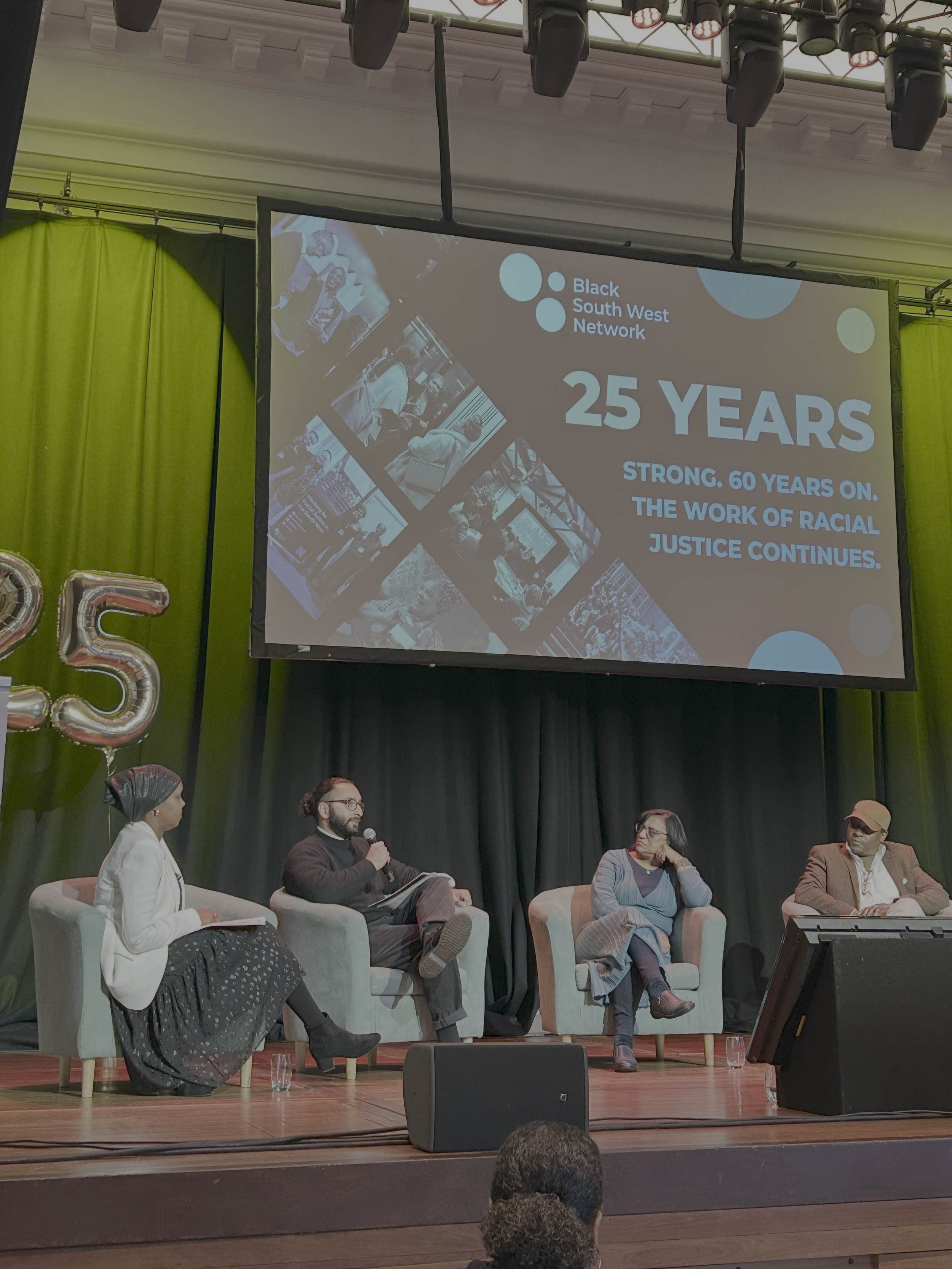
We leave this AGM with a renewed sense of commitment: to keep learning from the pat, to continue challenging inequalities in the present, and to actively shape a future where racial equity is not just a goal, but a lived reality for all. Not just a feature, but an undeniable foundation for better futures. It is through these collective efforts, through dialogue, creativity, and action, that we honour the legacies we celebrate today and build foundations for generations to come.
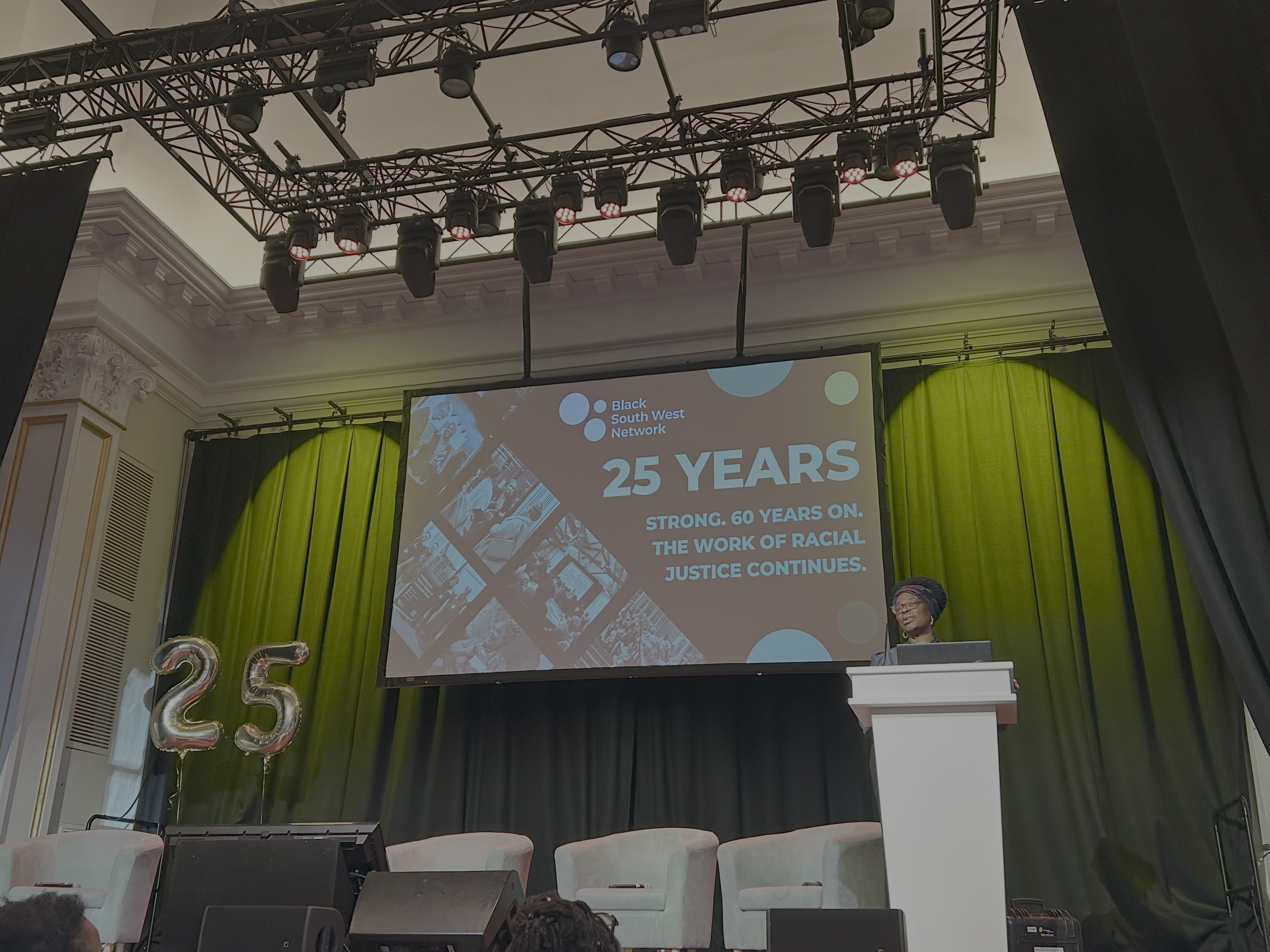
Keynote Address
by Asher Craig
Good afternoon everyone.
It’s a real honour to stand here — not as an outside observer, not as a commentator — but as someone who was there at the beginning. Someone who helped build the foundations that made BSWN possible.
I founded the Black Development Agency (formally the Bristol Black Voluntary Sector Development Unit or BBBSDU) back in 1989 — long before “infrastructure”, “capacity building”, and “ecosystem development” became fashionable policy language. And when the call went out for regional BME infrastructure in the late nineties, we stepped up. BDA became the home, the incubator, and the strategic base that hosted what would become the Black South West Network.
In its formative years BSWN was incubated at BDA at our offices in Russell Town Avenue. I still have many of the emails, briefing & policy notes from that era. So when I speak about BSWN’s origins — it’s not theory, it’s lived experience.
A Network Built Because the System Wouldn’t Build It
Let’s rewind to the early 2000s. The Labour government was pushing to level the playing field by creating regional infrastructure for the voluntary and sector bodies — both mainstream and BME-led — across England. Every region had a version of BSWN. But most didn’t survive.
Why? Because the ecosystem around them didn’t invest properly, didn’t understand racial equity, and didn’t hold space for Black-led leadership that wasn’t willing to be tamed.
Only BSWN endured. And that survival wasn’t luck — it was architecture, governance, and relentless community-led strategy.
2005 — The Moment We Called Out the System
By 2005, after BSWN mapped the landscape, the findings were unambiguous:
BME infrastructure in the South West was weak and structurally underfunded.
National reports echoed the same story. And mainstream agencies kept repeating the same excuse: “There’s no BME infrastructure to work with.”
Meanwhile, Black-led organisations were forced to say: “We have no capacity because no one invests in us.” So BSWN — still hosted inside BDA — broke that cycle.
We set out a region-wide framework to:
Build capability inside marginalised communities.
Reduce dependency on mainstream bodies that didn’t know how to engage us.
Create BME-led subregional hubs that could direct investment and shape strategy.
Futureproof the sector as demographics shifted.
And we were crystal clear: a BME infrastructure organisation must be led and governed by BME communities — not tokenistically, but structurally.
That clarity changed the game.
Governance Done Properly — Regional, Not Parochial
Our governance model was ahead of its time. Subregional representation wasn’t a tick-box; it was the backbone:
Data he based in Plymouth representing Devon and Cornwall
BDA anchoring Bristol
Linking Communities in Gloucestershire and Wiltshire
with partners like CAB and ACRE strengthening the ecosystem in Somerset
And we weren’t sitting on the margins.
BSWN was directly connected to the major regional decision-makers of the time:
South West Forum
Primary Care Trusts
Learning & Skills Council
Regional Development Agency
Government Office of the South West
Remember those institutions? All gone now — dismantled in one of government’s most chaotic periods of restructuring. But back then, they shaped the region’s economic and civic agenda, and BSWN was plugged into every one of them. That’s why BSWN had voice, traction, and influence. We built a system — not a project.
The ChangeUp Era — A Rare Window That Didn’t Last
Many of you will remember the ChangeUp programme — run through the Active Communities Unit in the Home Office. It was the first time government made a serious attempt to modernise voluntary sector infrastructure. ChangeUp backed BSWN. It funded development, strengthened regional work, and enabled us to anchor BME leadership across the South West.
And then?
ChangeUp was dismantled.
Government Offices disappeared.
Regional development agencies were scrapped.
The entire infrastructure ecosystem collapsed.
Let’s be clear: when government walked away, Black-led organisations paid the highest price. Yet BSWN didn’t fold. You adapted. You reshaped your model. You kept going when everything around you fell apart. That is institutional resilience.
The Incubation Years — The Leadership Line Starts Here
Before BSWN became the powerhouse we know today, it grew inside Black Development Agency (BDA) — deliberately, strategically and with care.
Rupert Daniels led the regional programme as Project Manager. To support Rupert, we created a Policy Officer role. That post went to someone whose leadership was already obvious even then: Sado Jirde. Even in those early years, you could feel her clarity, discipline, and ambition. And yes — the rest is history. And let me honour someone essential who rarely gets the spotlight: Karen Sutcliffe, BSWN’s 1st Administrator. The operations backbone. The person who kept the engine running. Organisations don’t survive without people like Karen.
BSWN’s evolution was intentional, structured, and built by people who understood exactly what they were doing.
Sixty Years Since the Race Relations Act — A Reality Check
Today we’re also gathering on the 60th anniversary of the UK’s first Race Relations Act. A political milestone — yes. A structural shift — not really. The Act recognised racism, but it didn’t dismantle it. Its enforcement was weak. Its scope was narrow. And its impact was limited. Sixty years later, racism hasn’t disappeared — it’s evolved.
It shows up in policing, immigration, AI and surveillance, labour markets, education, housing, procurement, digital systems — the whole machinery of everyday life. It’s less visible, more technical, and harder to dismantle. And we are living through a moment of global and domestic turbulence — conflict, displacement, far-right nationalism, austerity, political fragmentation.
The challenge is simple: Legal equality is not the same as lived equality. Our task — and BSWN’s task — is to shift systems, not symptoms.
BSWN Today — The Premier Black-led Organisation in the Region
Let’s bring it back to the present. I’ve just completed a regional listening tour across England. I’ve met Black-led organisations across the South West. And let me say this with absolute clarity:
BSWN is the standout organisation.
Not just strong — exceptional.
Not just visible — influential.
Not just surviving — leading.
BSWN operates with a level of sophistication, scale and strategic muscle that many mainstream organisations can’t match. So, to Sado, Marti, the team, and the trustees — congratulations. You have turned a project incubated inside BDA into a nationally recognised institution.
Looking Ahead — The Honest Truth and the Hope That Drives Us
Let me close on something personal. When I was younger — an activist with far too much fire and not enough patience — I used to ask myself: Is racism ever going to end? And the answer, the bitter pill, is no. Not completely. But here’s the hope that keeps me going:
The experiences we are dealing with today do not have to be inherited by the next generation.
We can bend the arc.
We can change the conditions.
We can make the future feel nothing like the past.
That’s what BSWN is doing.
That’s why leadership matters.
That’s why today matters.
And that’s why the next 25 years matter even more than the first.
I may not be here to celebrate that next milestone with you — but the work you’re doing now ensures the future will be different. It ensures that the South West, and the country, are stronger because BSWN exists.
Thank you. And congratulations again to the entire BSWN family.
Asher Craig
Former Chair of the Black Development Agency (1989-2001) & Deputy Mayor of Bristol (2016-2024)
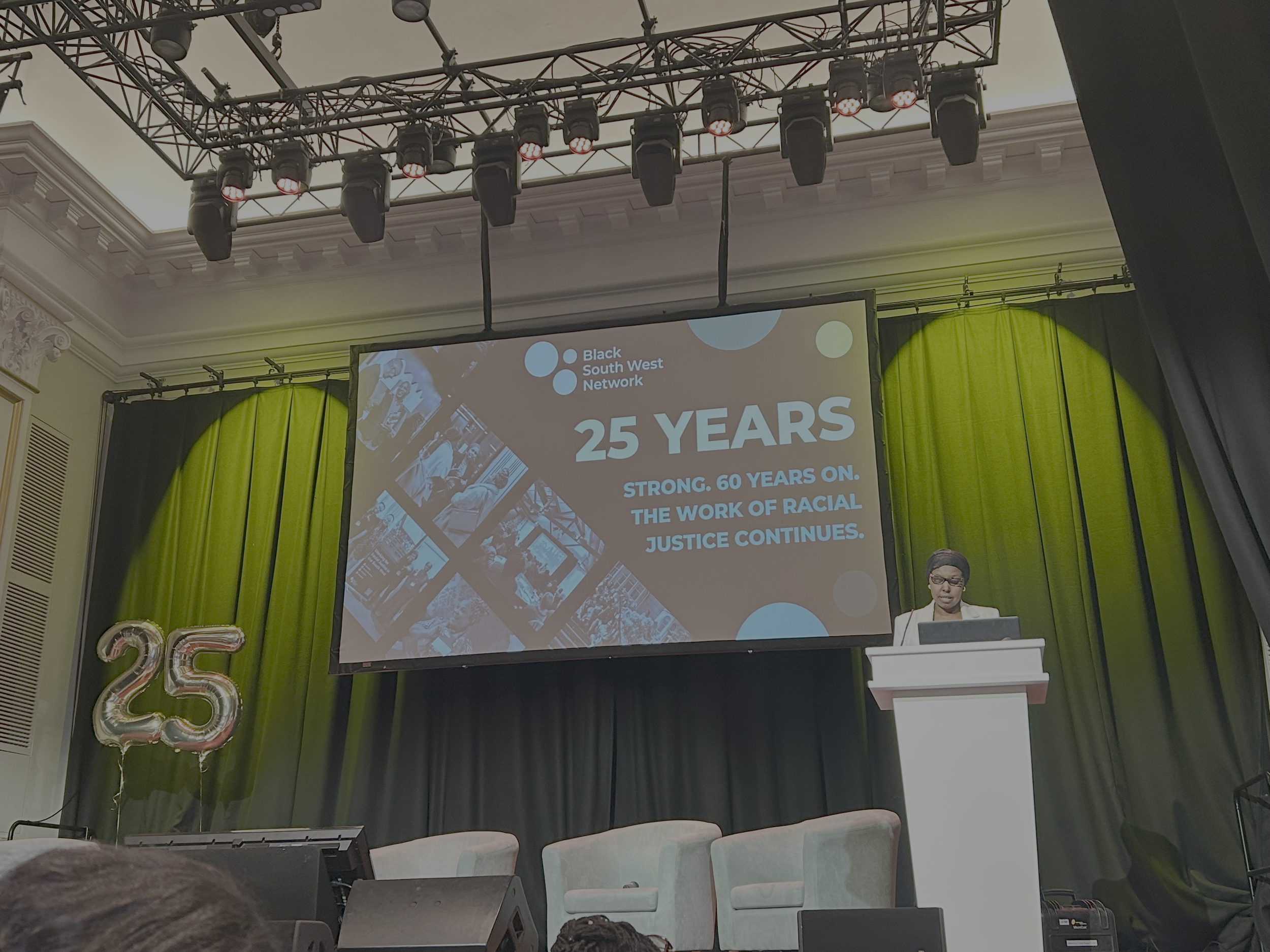
Keynote Address
by Sado Jirde
From 1965 to 2025: Race Relations in an Age of Global Unravelling
Good afternoon, friends and colleagues
Thank you for joining us today at Black South West Network’s Annual General Meeting.
This is a special year for us, not only because it marks BSWN’s 25th anniversary, but because it also marks 60 years since the UK’s first Race Relations Act.
When that legislation was passed in 1965, it was a moment of recognition, the first time the British state formally admitted that racial discrimination existed and was unacceptable.
But let us be very clear: it did not come out of government goodwill or benevolence.
It came out of struggle. Out of protest. Out of the refusal of communities to accept exclusion and racism as inevitable.
Here in Bristol, that struggle took the form of the 1963 Bus Boycott, when the local bus company refused to employ Black or Asian drivers. Young activists, inspired by the US civil rights movement, organised and mobilised until the company backed down. Their victory reverberated nationally, showing the country that racism was not only real but could be challenged and defeated. Alongside other struggles in Birmingham, London, and across the UK, it created the pressure that made the Race Relations Act unavoidable.
But even as we acknowledge that breakthrough, we must also acknowledge its limits. The Act only covered public places. It excluded housing, it excluded employment, and it was largely unenforceable. It was, in many ways, a symbolic gesture, important, yes, but insufficient. The deeper structures of racial inequality remained untouched.
And that is the pattern we must pay attention to. Because racism does not stand still. It adapts. It mutates. It finds new forms. In the 1960s, exclusion was explicit — “colour bars” in housing and employment, signs in shop windows reading “No Blacks, No Dogs, No Irish.”
Today, those signs are gone, but their spirit survives in more sophisticated forms:
In the hostile environment that embeds border checks into hospitals, schools, and workplaces;
In immigration laws that divide families and treat human beings as disposable;
In racialised policing and surveillance, now augmented by algorithms and predictive technologies that reproduce bias under the guise of neutrality;
In austerity policies that gutted public services, with disproportionate impacts on Black and racially minoritised communities;
And in the stubborn racial inequalities in health, housing, education, and employment that continue to define life chances across the UK.
So, while the 1965 Act was a step forward, it did not end the struggle. It showed us that laws matter, but laws alone are not enough. Legal equality does not automatically translate into lived equality.
A Global Age of Unravelling
And if that is true in the UK, it is equally true on the global stage. Because we are now living through what I would call an age of global unravelling. Across the globe, we are seeing humanitarian crises that reveal how displacement, conflict, and racialised injustice remain central features of our world.
In regions such as Palestine and Sudan, millions of people are facing violence, siege, forced displacement, and starvation. In the United States, hard-won civil rights gains are being rolled back, while anti-Black violence and voter suppression remain endemic. Across Europe, far-right movements are no longer fringe but are increasingly part of mainstream political discourse. These are not isolated crises. They are interconnected.
They are products of the same global systems: racial capitalism, extractive economies, militarised borders, and political regimes that entrench inequality and suppress dissent. And all of this is happening against the backdrop of climate breakdown. We know that climate collapse acts as a threat multiplier.
It intensifies every other crisis. It drives displacement. It militarises borders. It fuels conflict over resources. And it always falls hardest on those already marginalised, disproportionately on Black, brown, Indigenous, and poor communities around the world. So, when we talk about the Race Relations Act, we cannot treat it as a closed chapter in British history. We must see it as part of a much bigger, ongoing struggle — a struggle that is local, national, and global at the same time.
What Does Racial Justice Require Now?
The question, then, is this: what does racial justice require now, in this age of global unravelling? At BSWN, our answer is clear:
It requires systems change.
Because reform is not enough. We have had reforms. We have had laws. We have had reports and commissions. And yet the structures of inequality remain. What we need now is transformation — of the economic systems that reproduce inequality, of the political institutions that exclude and criminalise, of the cultural narratives that legitimise racism.
Systems change means asking harder questions. It means interrogating why wealth continues to be extracted from our communities and who benefits. It means challenging the ways in which data, algorithms, and technology are being used to reinforce inequality under the guise of efficiency. It means recognising that climate justice and racial justice are inseparable.
It also means moving beyond rhetoric to practice when it comes to solidarity. Solidarity cannot just be symbolic. It must translate into action. Into redistribution of resources. Into amplifying voices. Into connecting our local struggles here in Bristol with global struggles in Gaza, in Khartoum, in Minneapolis.
Into building infrastructures of resistance and care that can withstand backlash and endure for the long haul. And let us be clear: solidarity is not charity. It is not a gift. It is recognition of our interconnectedness, of the fact that our liberation is bound up together.
A Call to the Future
So, as we gather today, I want to challenge us not only to reflect on the past but to commit to the future. To ask:
If the 1965 Act was about outlawing overt discrimination in public places, what would a “Race Relations Act” for the 21st century need to address?
How do we move from legal equality to lived equality?
How do we build movements that are both locally grounded and globally connected?
And what does it mean, in practice, to change systems — not just policies, but power relations?
These are not easy questions. But they are necessary ones.
At BSWN, we do not pretend to have all the answers. What we do have is a commitment. A commitment to centring the voices and leadership of our communities. A commitment to building power, not just capacity. A commitment to working in solidarity, not isolation. And a commitment to advancing racial justice not only through projects and programmes, but through the hard, long-term work of shifting systems.
Sixty years ago, activists in Bristol and beyond forced this country to confront racism and concede legislative change. Their struggle is not over. It falls to us to continue it — to adapt as racism adapts, to resist as systems entrench themselves, and to imagine as the world unravels.
So, as we open this panel, let us not treat the 60th anniversary of the Race Relations Act as a commemoration. Let us treat it as a call to action. A call to courage. A call to imagination. Because racial justice in 2025 cannot simply mean the absence of discrimination. It must mean the presence of dignity, equity, power, and liberation, for all of us.
Thank you.